
IRT cross
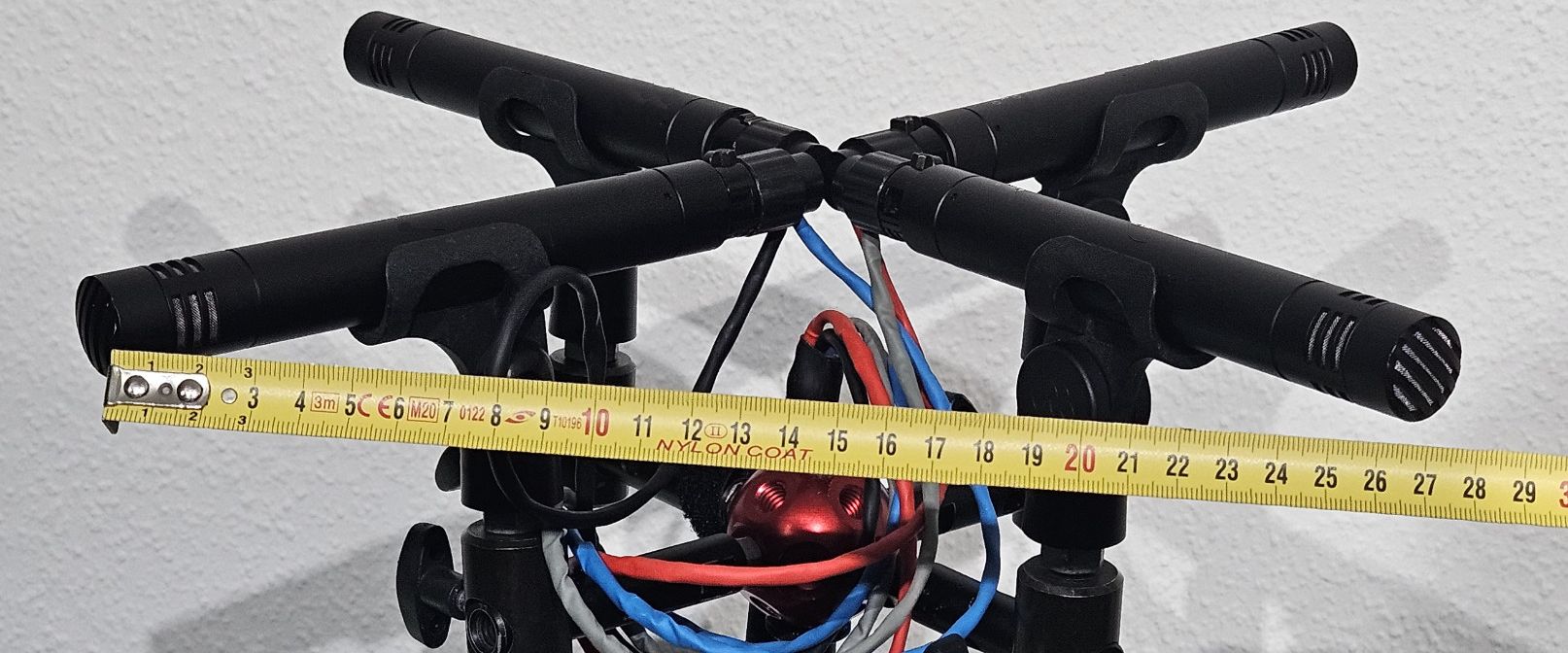
IRT cross
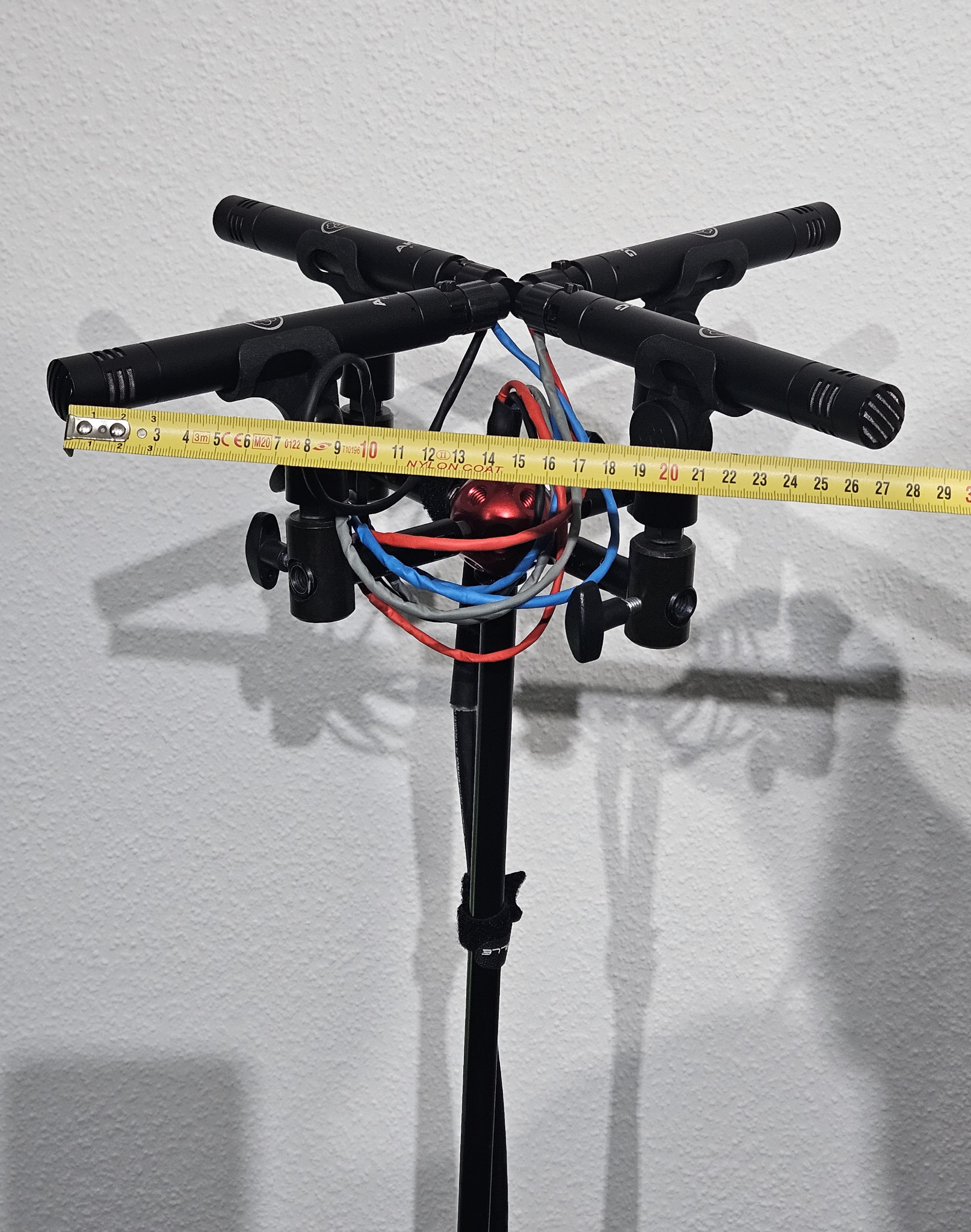
It consists of four cardioid microphones arranged in a square. The microphones are angled 90 degrees from one another and spaced 20 to 25 cm apart. With wide cardioids it should be 31 cm. But these microphones are not very common in the "not-yet-pro" area.
As a rule of thumb, remember this: The more focused the microphone pattern, the closer the microphones can be brought together. - But, as always, trust your ears more than your ruler!
The outputs from these microphones are routed to the left and right, as well as the left and right surrounds. Make sure, the levels meet your demands and your personal taste.
This setup provides a smooth ambience and a natural representation of the recorded space, is quite easy and fast to build and can be mounted on a regular microphone stand. An easy way to get some good ambience.
It can be easily combined with other immersive microphone setups, like OCT, INA 3 and others.
Setting up and aligning the channels is quite simple:
- Rotate the IRT cross so that the bisector between the planned front “left” and “right” points directly at the sound source.
- This means that the two rear microphones are routed to “surround left” and “surround right.”
- If you need a dedicated “center,” you can create a mono sum from “front-left” and “front-right” to reduce the volume by 3 dB. Not ideal, but 100% better than nothing.
- If you are in the need of an LFE, then route every channel to a single sub-mix track (mono) and apply a LPF with a frequency of something around 100Hz.
This setup has been used for years and still performs well.
Is it the choice of today's sound engineers? We doubt it, but it still provides a very smooth ambiance.
We recommend that you try yourself and let your ears be the judge. HERE is the tutorial to setup an IRT cross for your tests.
The choice is yours: this solution or another, such as the 2D-FOA with four cardioids.
And if you want to step into the third dimension and have a fully immersive experience, you should check out the tutorial about the double IRT-cross
You should also read:
Double IRT-cross
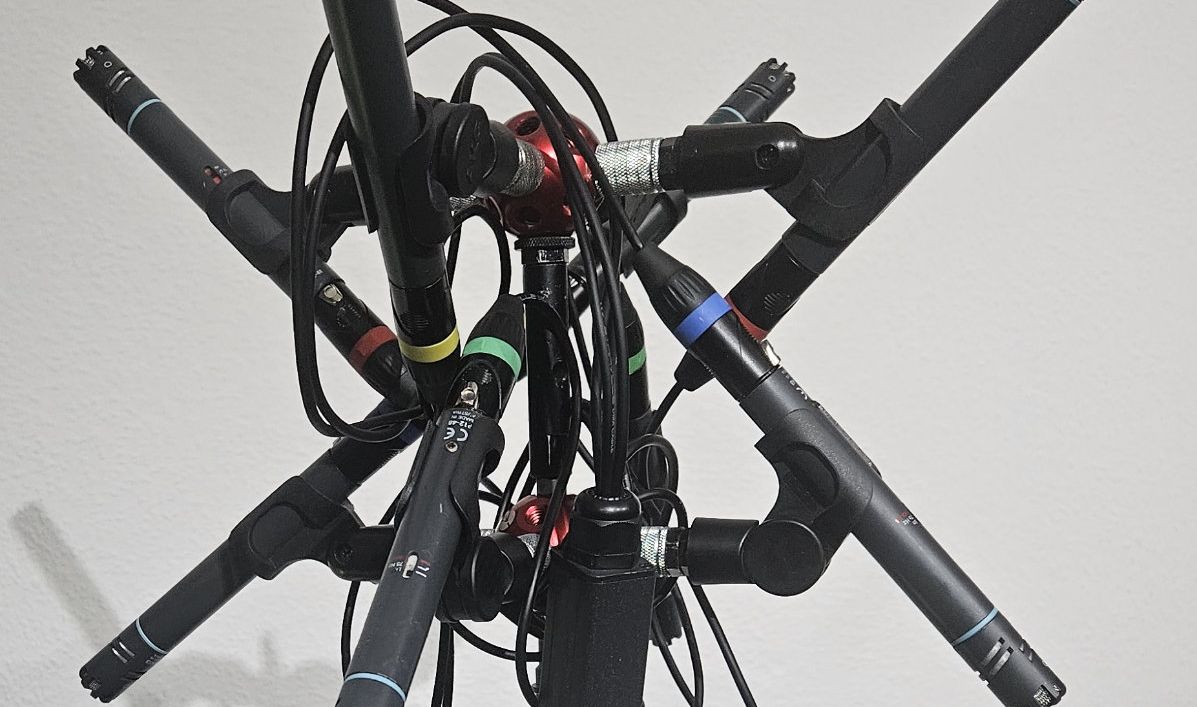
Double IRT-cross You may be familiar with the IRT cross from reading our article or from other sources. The IRT cross is an excellent option for recording an immersive soundscape, despite being quite old. It has been invented in 2002 by Dr. Guenther Theile. It…
Continue reading...