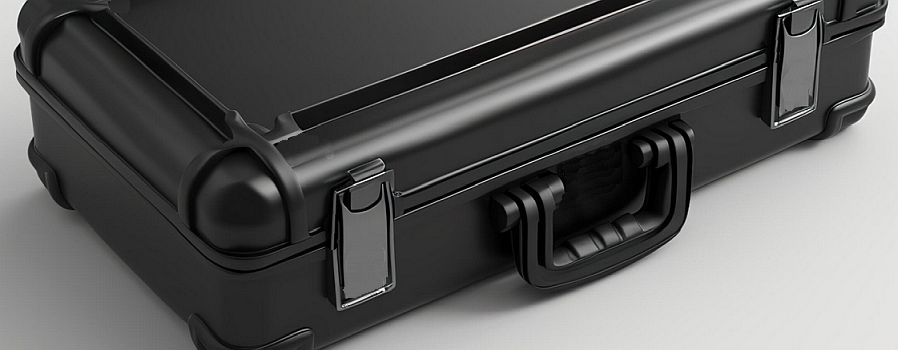
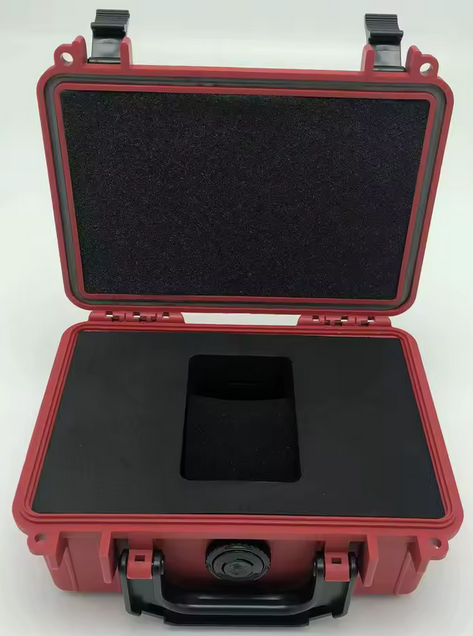
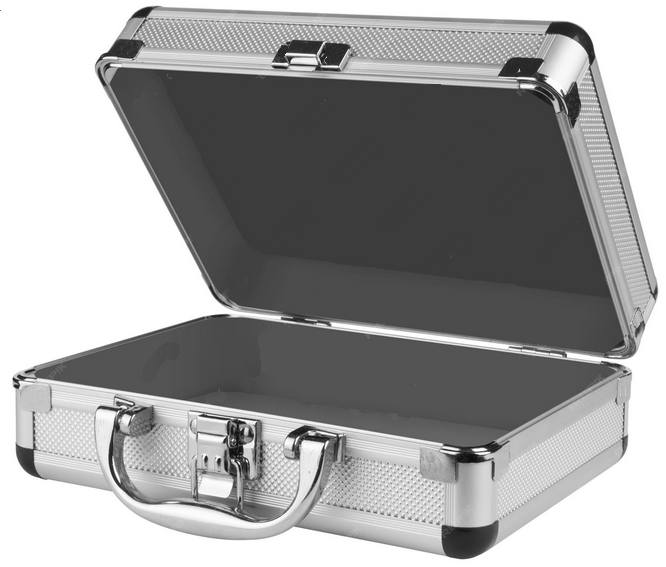
Hand cases are very useful for protecting your gear against shocks, impacts, dust and rain.
They are available in a variety of sizes and colors from a range of manufacturers. We use them wherever it makes sense. Sometimes our backpacks are full of hand cases, which in turn contain the actual equipment. This depends on the planned use.
We wholeheartedly recommend using hand cases. Compared to the equipment they protect, they are inexpensive and offer excellent protection. After all, damaged and unusable equipment is the most expensive outcome of all.
However, you don't need countless cases; you can adapt them for many different uses by choosing the right inner foam inserts. We have written a special article on this topic, which you can access HERE.
What to look for?
What should you look for when buying hand cases? First of all, make sure they close as tightly as possible. That's why it's important to choose a model with a rubber seal. This is the only way to keep your gear dry, even in heavy rain!
Whether the hand case needs to be lockable is a personal decision. We never let our hand cases out of our hands, except at airport security. You should also make sure that the fasteners are sturdy. Some manufacturers skimp on materials here, and if the fasteners no longer close securely, you might as well use a simple plastic bag. The pressure valve (in the middle of the handle) is important when traveling by plane, because the pressure conditions on the ground and in a high-flying aircraft can be so different that the lid can pop open or bulge significantly. However, in rainy weather, you should keep the pressure valve securely closed!!!
The foam inlays are usually included with purchase. They are also often available as replacement parts. You don't have to buy the manufacturer's foam inlays. It is often much cheaper to buy a larger foam sheet and cut it to size.
The dimensions
When purchasing, you should carefully ensure that the dimensions of the INTERIOR are large enough to safely pack your equipment. Safe means that there is at least 1 cm of foam between the case and the gear. For heavier items, we would recommend allowing for 2 cm. And that's in ALL directions.
It should also be noted that many hand cases are a few millimeters wider at the edges than at the bottom. So never choose a case that is too small!
Manufacturers usually specify the external dimensions first. However, the internal dimensions are of great importance to us. As a rule of thumb, you can calculate the internal dimensions by subtracting 2 cm from the external dimensions.
Which case for which purpose?
It doesn't always have to be the very secure and sturdy hand cases. For certain equipment, a hand case is sufficient. For cables, windshields, tools, microphone clamps, or the indispensable duct tape. Tool cases, which can be purchased for little money at the supermarket or hardware store, are sufficient for this purpose.
Additional tips and tricks
What applies to your cables and tripods applies to your cases and suitcases as well. We recommend wrapping some insulation tape around the joint of your case's handles, as described HERE.
Handheld recorders Since our focus is on immersive audio, we look for recorders with at least four microphone inputs (XLR). While other handheld recorders are great and offer great advantages, they are not suitable for our purposes. Therefore, we are not focusing on them. However,…
How to record SMPTE timecode if your handheld-recorder doesn't provide this feature. Let's assume, you have a handheld recorder with no SMPTE features, neither read, nor write. But you need to synchronize your recordings to a video in post with a time-code, in this case…