
Corey/Martin Tree
Corey/Martin Tree
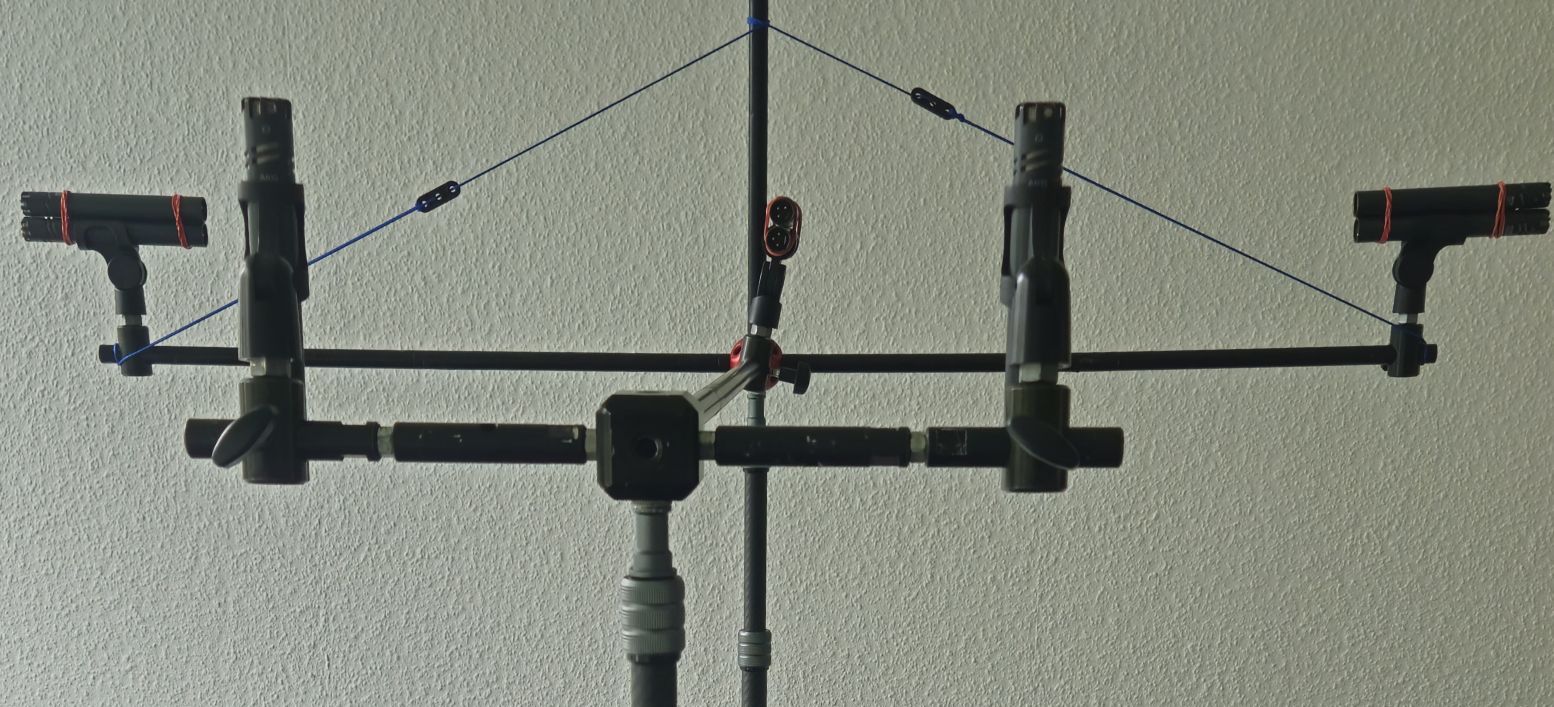
Geoff Martin and Jason Corey developed this array in 1999, which uses an omnidirectional microphone and a cardioid microphone to produce a wide cardioid response.
The advantage is that one can adjust the width of the wide cardioid by adjusting the relation of the volumes of each microphone. Very nifty!
To prevent interchannel interference, the microphones were originally spaced L-C, R-C, front-rear at 60 cm (about 24 in), and LS-RS at 30 cm (about 12 in). These are recommendations, but you may change them according to the venue where you record.
Thus, the distance between the L-C and R-C microphones may vary from 60 to 80 cm (about 24 to 31 in), and the distance between the front and rear microphones may vary from 60 to 90 cm (about 24 to 35 in).
The only fixed distance is the difference between the two rear microphones (LS and RS), which is exactly 30 cm ( about 12 in).
The rear microphones (cardioids) were aimed upward to capture height information.
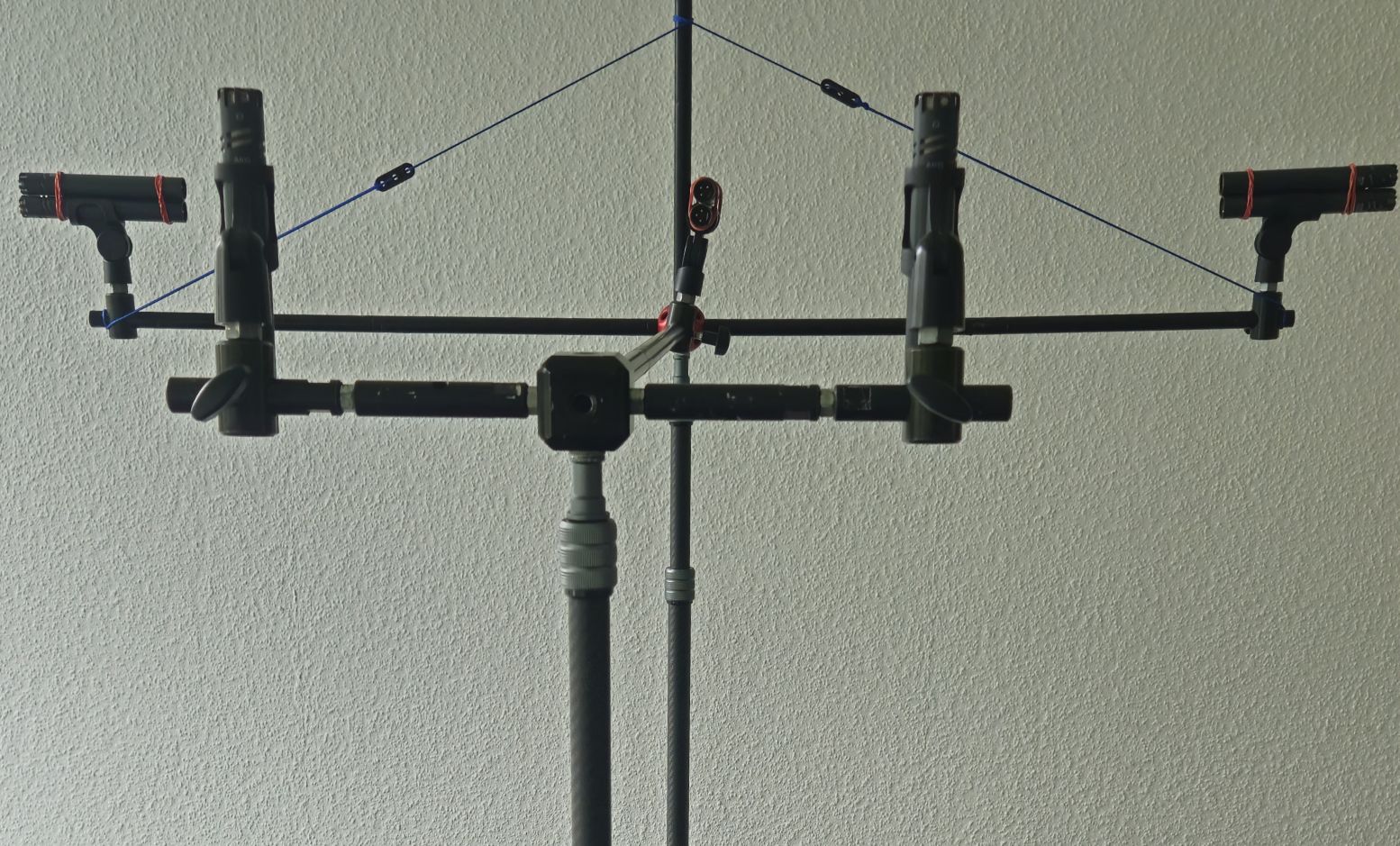
The setup is pretty straightforward and not a real challenge.
To place the omnis and cardioids as close together as possible, we fixed these pairs of microphones with two sets of regular rubber bands.
This is not the best solution, but it is the lightest.
The only unsolved problem is that we don't know of a good wind protection solution. We concur that this is an infrequent occurrence; nevertheless, we do require a wind protection.
So, if you have any idea how to do this, please don't hesitate to let us know.
The tutorial can be downloaded HERE and the shopping list is available HERE.