
HOSMA
HØSMA
HOSMA is a project of the "AudioGroupCologne" of the University of Applied Sciences in Cologne.
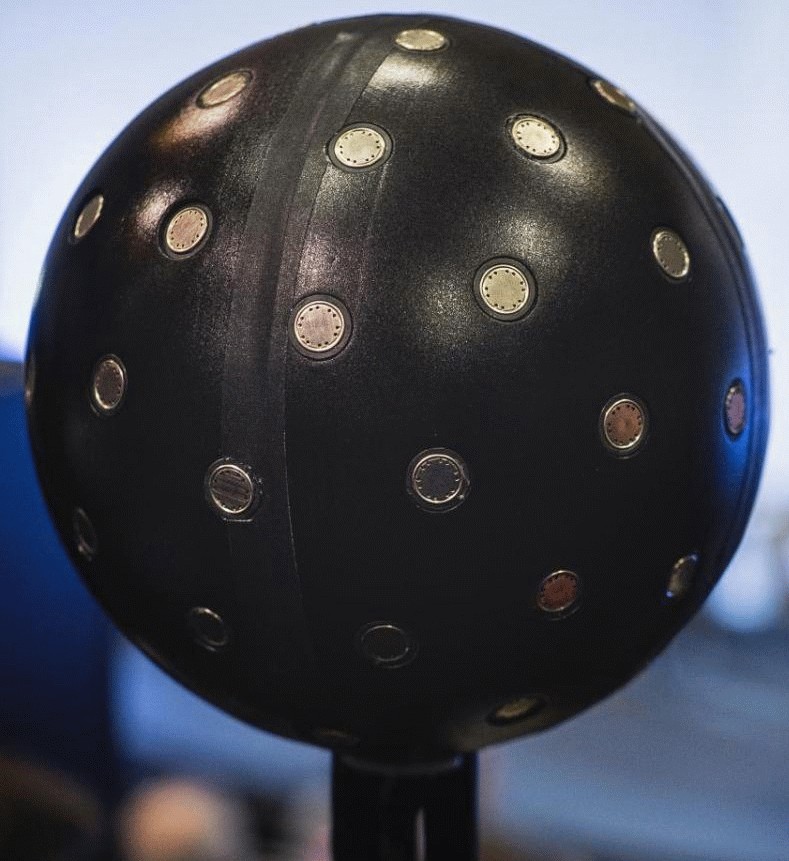
Although it is about six years old, it hasn't lost any of its fascinating details. But what is it?
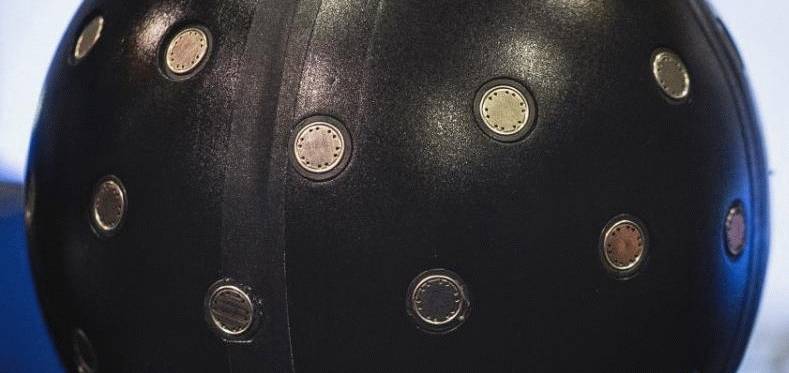
It is a 3D-printed sphere with a diameter of 23.5 centimeters and if has 64 (in words: sixty four) microphone capsules. To be precise: Sennheiser's KE14. If you are not a dealer of Sennheiser spare parts, you won't get it. (we tried already)
The engineers put a lot of work into designing this device to make it immune to electromagnetic interference. Actually they did an excellent job! - BUT this unit is heavy and we mean heavy!
If you're open to adventure, this might be the right choice for you.
We are interested in Python scripts that can distribute microphones at equal distances across a sphere's surface. With a few minor adjustments, you can calculate the distances for a e.g. third- or fifth-order ambisonic microphone system. And then you can import this into Blender and you'll get your 3D-model.
This is a significant part of the job, but not the only part.
When I talked to the team that built this prototype, they emphasized: "Don't underestimate the effort.
You are building things no one has built before." There will be obstacles and a lot of trial and error." You may have to throw your whole prototype away because you just learned something very important that you didn't know before.
As already said: If you are open to adventures: HERE is the entrance to the rabbit hole.
The team also published an Convention e-Brief on AES. If you have a login, HERE is the article "Development of an Open Source Customizable High Order Rigid Sphere Microphone Array"
I am sure, this will trigger new ideas and/or help you with make yours reality.