
DMS system - Double M/S system
DMS system - Double M/S system
The M/S (mid/side) system is well-known for its use with stereo microphones. Its advantage is that it allows one to adjust the width of the stereo impression in the final mix. This makes it very versatile and flexible.
A DMS system can produce the same results with two different setups.
Version 1:
Four small diaphragm condenser microphones with cardioids pattern
The equipment needed is the same as with the IRT-Cross. The main difference here are the positions of the microphones.
Lets have a closer look at a DMS system with four "cardioids" first.
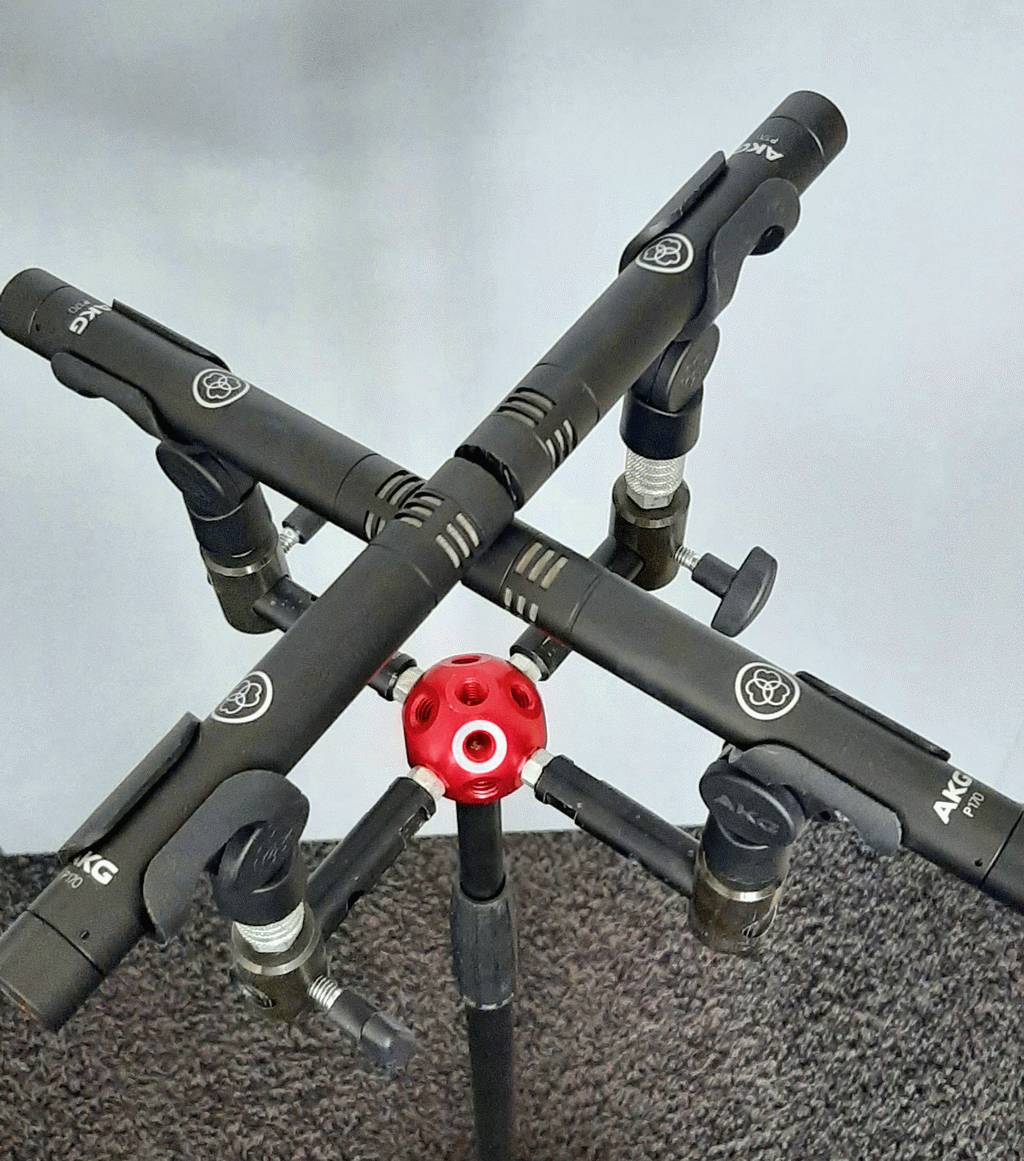
The microphones are used as follows: The two microphones at the "lower" level are the "back cardioid" (the left one) and the "front cardioid" (the one on the right)
In the level above there comes an interesting trick:
These two microphones are referred as a "virtual figure of eight" microphone. The microphone on the right is the S or S+ and the other is the S' or S-. Both routed to a sub bus (mono!!!!) will be the figure-of-eight microphone, that is expected in the plugins.
A regular "figure of eight" has just one capsule, but more on this in the other setup, shown below.
After AKG stopped building the CK 94 capsule for their blue-line Series, there is no affordable "figure of eight" microphone on the market, when we leave the "used market" aside. But you have to very (!) lucky to get one.
Instead, there are plenty of SDC with cardioid patterns available for an attractive price.
So we only need two more such cardioids and two sets of the thread adapters mentioned in the Shopping list
You may think, this setup looks almost the same as an IRT Cross and you are kind of right.
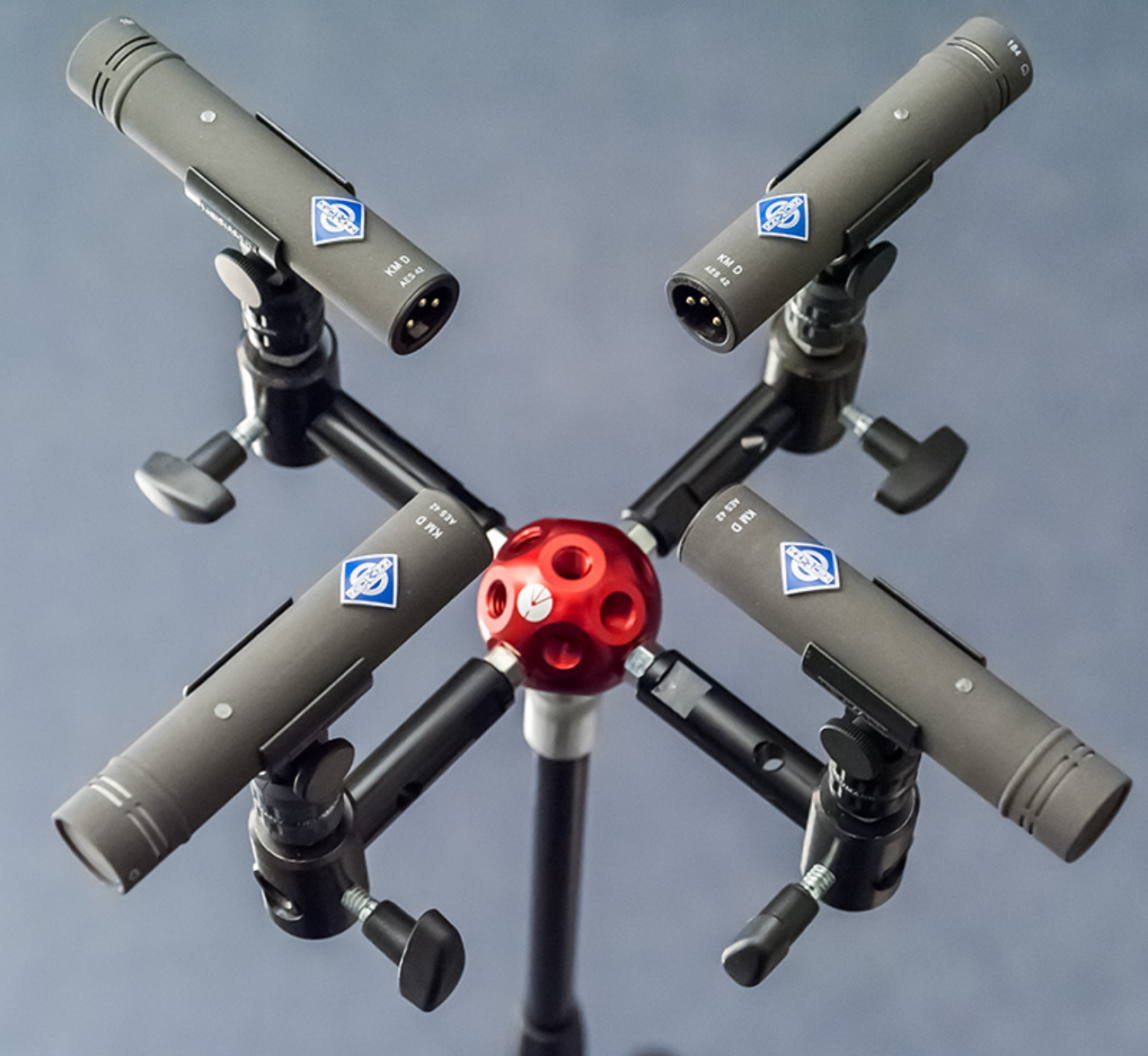
The necessary items are the same, except for the two additional sets of thread adapters.
Do you know where I'm heading? You can take one setup with you and have two solutions in your bag. Nifty, isn't it?
The main difference occurs in post after the recordings have been made. If you're into ambisonic, as we are, you'll love the "ab Encoder MS" from the Audiobrewers. It costs about 15 USD, but it's well worth the price. It's so intuitive and easy to use, and it provides ambisonic of first up to seventh order. (It's just our humble opinion and we won't get anything in return for saying so!)
The only "trick" is to route the two signals of the cardioid microphones (of the virtual figure of eight) into a mono bus and route this to second channel in the plug-in. And then, you are ready to enter the great world of ambisonic. At your own risk, of course.
If you are fine with just getting ITU 5.0 you may use the DMS Plug-in from Schoeps. It produces great sound, but unfortunately no ambisonic.
As this is a little bit tricky, we provide an extra article on this HERE. But don't worry, once you followed the instructions thoroughfully it will work like a shine.
Version 2:
Three small diaphragm condenser microphones
Now let's have a look to another version of the DMS system.
This time we build it with two SDC cardioid microphones and an additional figure-of-eight microphone. The main advantage is that it only uses three channels on your 4-channel handheld recorder. This leaves one channel free for additional recordings like an extra LFE or a contact microphone, if you like
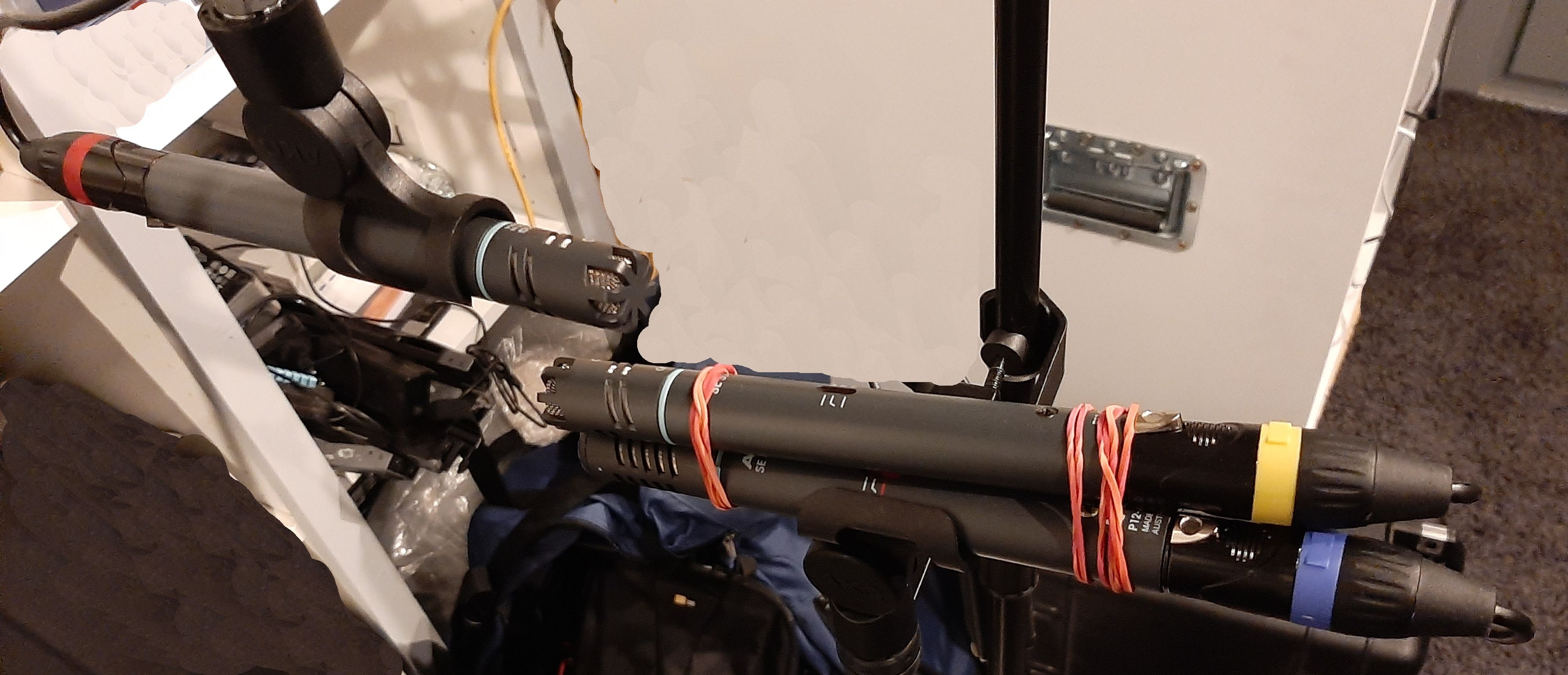
This is the first version. The microphone with the blue-ringed XLR connector is a figure-of-eight microphone, and the others are cardioids, front and rear.
The setup has been improved, but the rubber bands are still the best way to position the microphones.
As soon as the new pictures are available, we will update this page!
You should also read:
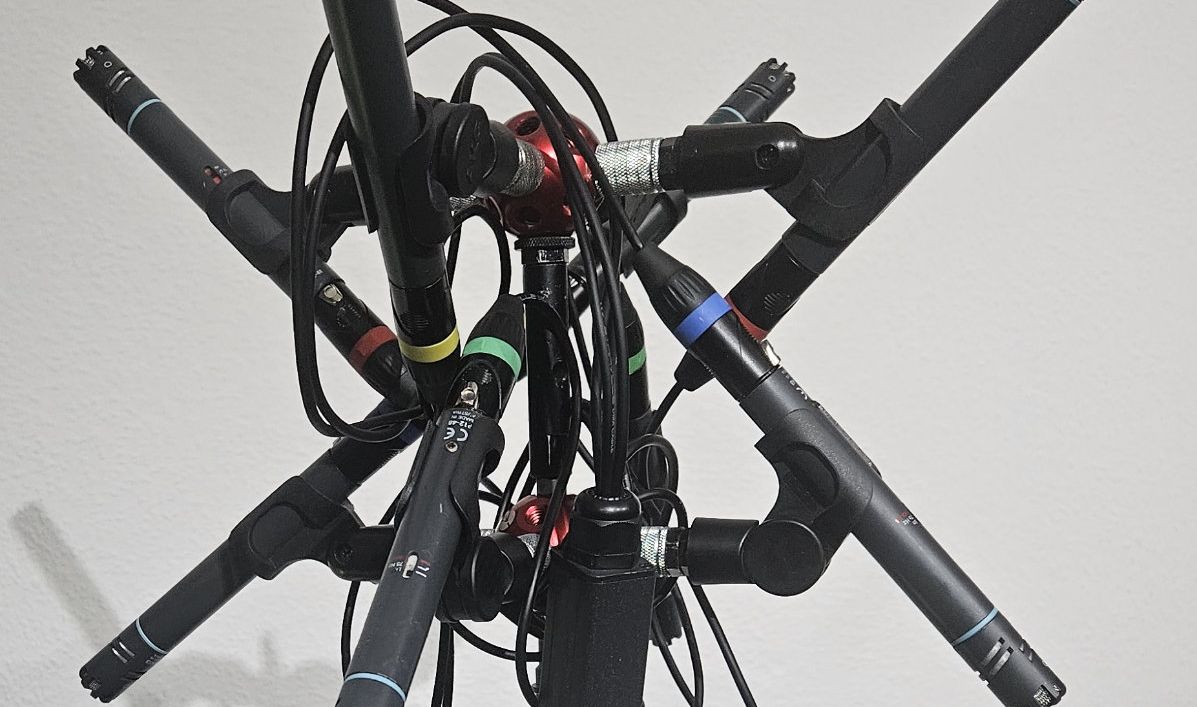
Double IRT-cross
Double IRT-cross You may be familiar with the IRT cross from reading our article or from other sources. The IRT cross is an excellent option for recording an immersive soundscape, despite being quite old. It has been invented in 2002 by Dr. Guenther Theile. It…
Continue reading...
Ambisonic microphone systems you can buy
Ambisonic microphone systems you can buy Zylia ZM-1 If you have some money saved up and are looking for an extraordinary high-order ambisonic microphone system, you may want to try this: People sometimes sell the Zylia ZM-1 on eBay for an attractive price because they…
Continue reading...M/S Stereo system with two caridioid microphones
M/S Stereo system with two caridioid microphones When we first saw this, we couldn't believe it! How should that work? Just two cardioid microphones facing each other and that's it? Actually ... yes! At least when it comes down to the recording itself. The routing…
Continue reading...Tutorials for easy microphone systems
Tutorials for easy microphone systems You will find tutorials here on how to set up easy microphone systems. We update this page from time to time, so please check back for new tutorials any time you like. ... if you like what you see, please…
Continue reading...Tutorials for advanced microphone systems
Tutorials for advanced microphone systems Inspired by the ECHO project we will show you advanced microphone systems, not only in ambisonics. We are convinced, that these systems will also inspire you and may be helpful, if you have to record an orchestra. No matter which…
Continue reading...