
FOA in B-format
FOA in B-format
The most available First Order Ambisonic (FOA) microphone systems are using an indivudal format to record the sounds. This is commonly referred as the "A-format". And if it is not possible to convert them with standard-plugins into the so called "B-format", the venoor provides some converters.
As far as we know, there is only one way to record in native FOA b-format: You have to have three "figure-of-eight" microphones and one "omni".
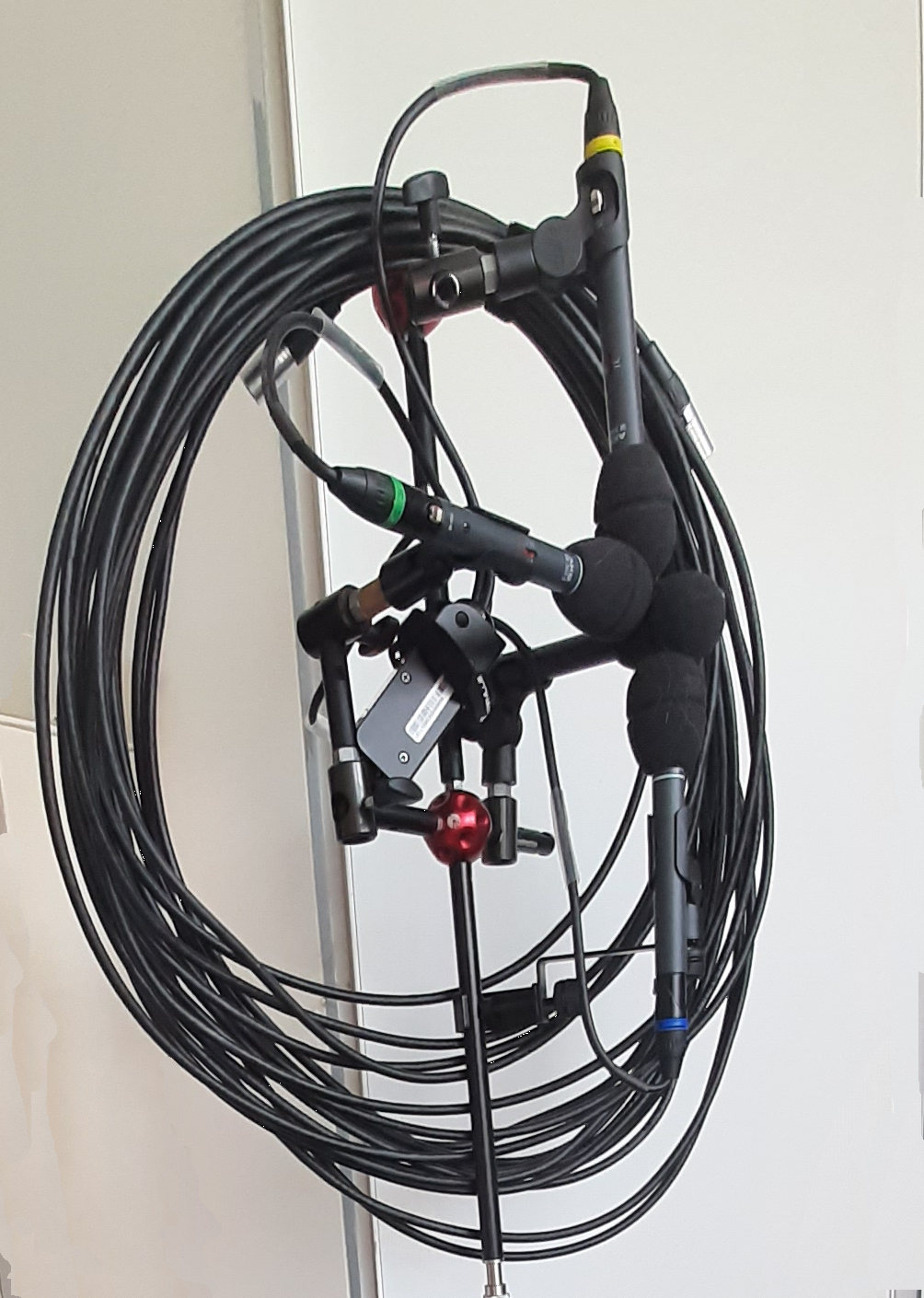
Above, you can see a setup with the windscreen that comes with the microphones. It's not the best you can get, but it's good enough for a little “air movement” inside a venue. Out in the field, this protection isn't useful unless it's almost completely windless or just a few leaves are moving slowly.
We are working on a wind protection, but this will take some more iterations to become good. As soon as we have something to show, we will do.
If you don't have three figure-of-eight SDCs available, you can use Large Diaphragm Condenser (LDC) microphones instead. In this setup we used AKG C414 XLII (gold) and AKG C414 XLS.
We have tried this and it works fine, but you should keep a reasonable distance from the sound source so that the microphones, which are not so close together, will not cause any audible decorrelation.
For our personal taste the "Z-microphone" shoudl be an AKG C 414 XLS, as it provides more air to the high frequencies of the height information. But it will work also with a XLII. It's a question of personal taste.
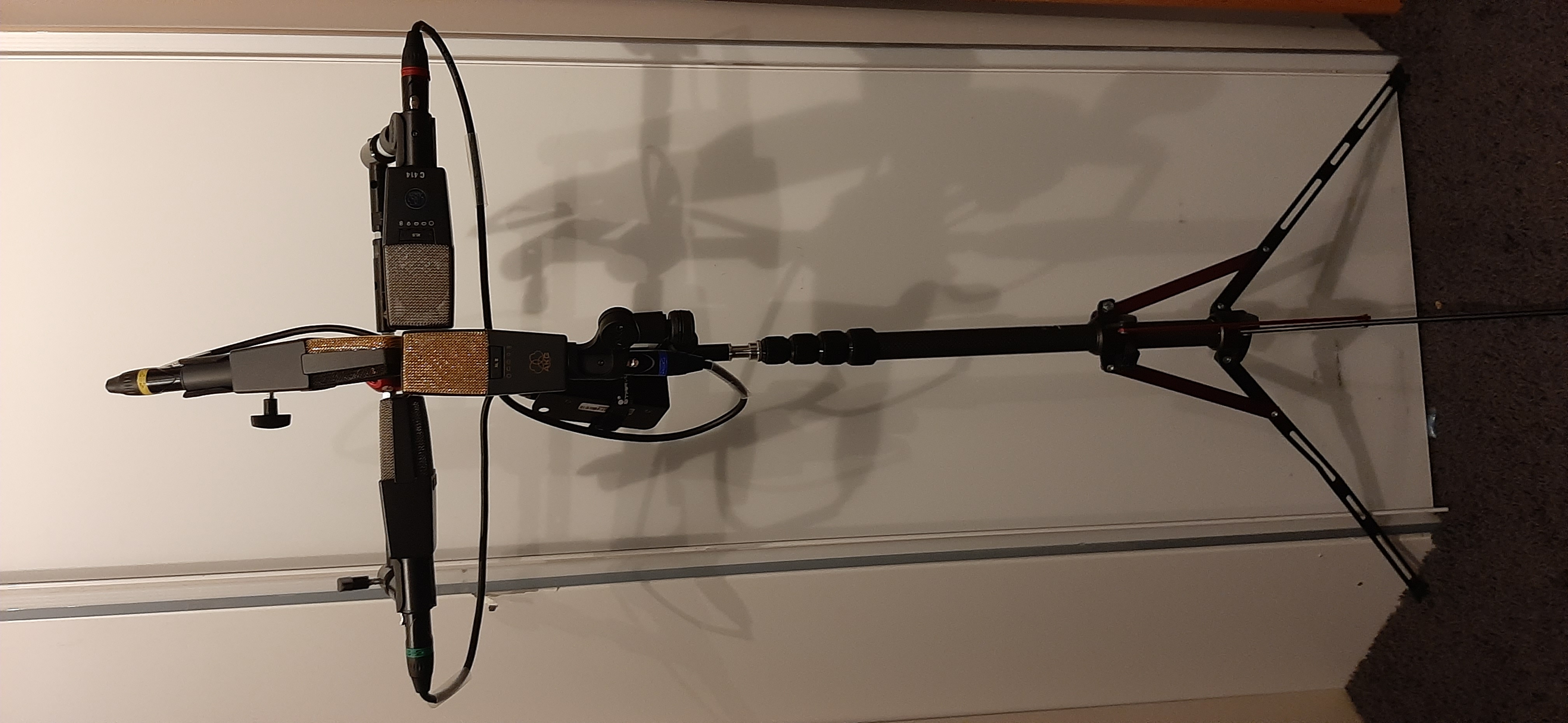
We used this setup to record a jazz duo (piano and vocals) in a studio, and it worked very well as a reverb. It added a "roomy" sound to the recording, making the piano and vocals sound more vital and interesting. Unfortunately there are some issues with the publishing rights, so we can't provide an example here. We are sorry.
Some additional information
The Ambisonic B-format channel sequence follows an international convention regarding AmbiX.
For FOA, this is 'W, Y, Z, X'. "W" stands for "world", meaning the omni, and the other letters indicate the corresponding axes.
There formaly was the so-called FuMa format. It differens from the modern "AmbiX" format, by the sequence of the channels. FuMa's sequence is "W, X, Y, C" and they use different gain-settings. Even if you use the wrong format, you will hear something. It may sound ... strange and unbalanced, but you can't break anything.
Due to the demands of Youtub and Facebook, the AmbiX format has become more popular and is widely used.
The good news is, there are converters from and to of each of these formats. So no worries.
Remember: Neither the A-format nor the B-format are demanding FOA recordings ONLY! The definitions of AmbiX are applicable up to 10OA, which would require 121 channels (in words: one hundert twente one).
Well, let's stick to the easier things first, before we scale up.